
Table of Contents
- What Low EMF Actually Means in an Infrared Sauna
- The Core Infrared Sauna Benefits Worth Knowing
- Infrared Sauna EMF Levels: What the Numbers Mean
- Why Low EMF Changes the Whole Experience
- Infrared Sauna Session Duration: How Long to Stay In
- Infrared Sauna Risks and Precautions to Respect
- Choosing a Low EMF Sauna for Your Home
- Frequently Asked Questions
Last Updated: 18 October 2026
What Low EMF Actually Means in an Infrared Sauna
Low EMF in an infrared sauna means the cabin is engineered so that electromagnetic field emissions at the heater and wiring stay well below the levels that would normally prompt concern. Every electrical appliance produces some EMF. The question is how much, and where it sits relative to your body.

At NORDEN SAUNAS, we treat this as a design constraint rather than a marketing badge. Far-infrared carbon panels are sealed behind timber, wiring is routed away from the seating position, and the cabin itself is built from natural hemlock rather than metal-heavy composites that can amplify fields.
That distinction matters more than most buyers realise. A cheap cabin can pass a basic safety check and still place a strong field right where your back rests. Understanding low emf infrared sauna benefits starts with understanding that "low" is a relative term, and that placement of the heaters decides the actual exposure.
The Core Infrared Sauna Benefits Worth Knowing
The benefits people actually report from infrared sauna use are modest, cumulative and related to heat exposure rather than anything electrical. Infrared sauna benefits fall into two broad camps: nervous system recovery and physical recovery. Neither is dramatic in a single session. Both build with consistency.

Relaxation and Stress Recovery
Heat exposure raises skin temperature and prompts vasodilation, which many users describe as a deep, settling calm that lingers for an hour or two afterwards. The ritual matters as much as the physiology: a quiet, enclosed space, no phone, no conversation, a fixed block of time that belongs to nobody else.
For people managing high-stress work, that enforced pause is often the real value. The sauna is a room that makes stopping easier.
Muscle Recovery and Circulation
Infrared warmth penetrates tissue more deeply than ambient hot air, which is why athletes tend to favour it over traditional steam. Blood flow to the skin and superficial muscle increases, and users commonly report reduced stiffness the following day.
The evidence base here is reasonable rather than overwhelming. Treat infrared saunas as a supportive recovery habit, not a treatment for injury.
Infrared Sauna EMF Levels: What the Numbers Mean
Infrared sauna EMF levels are usually quoted in milligauss (mG) and measured at a set distance from the heater. The measurement distance is the part suppliers leave out, and it changes everything.

A reading taken 5 cm from a heating panel tells you almost nothing about what your torso absorbs when seated 40 cm away. When you compare cabins, insist on readings taken at the seating position, at the head, and at the back. Anything quoted without a distance is not a measurement, it is a slogan.
In practice, most reputable manufacturers design to keep fields at the body low, and the variation between a well-built cabin and a poorly built one is far greater than the variation between two good ones.
Why Low EMF Changes the Whole Experience
Here is the part most guides get wrong: low EMF is not primarily a health claim, it is a comfort and confidence claim. When you know the cabin is well shielded and the heaters are sensibly placed, you stop thinking about it. That mental quiet is what makes a daily habit stick.
The opposite is also true. Buyers who spend their first month worrying about emissions tend to use the sauna less, and a sauna used twice a month delivers very little of anything.
There is a craftsmanship signal too. A manufacturer that bothers to shield wiring and specify panel placement usually bothers about joinery, timber quality and airflow as well. Low EMF tends to travel with the rest of the build quality.
Infrared Sauna Session Duration: How Long to Stay In
Infrared sauna session duration for most people sits between 20 and 40 minutes at a comfortable temperature, with beginners starting at the lower end. Longer is not better. Heat exposure has diminishing returns and rising discomfort.
1 Person Home Infrared Sauna →
A sensible progression looks like this:
| Stage | Session Length | Frequency | Notes |
|---|---|---|---|
| First two weeks | 15-20 minutes | 2-3 times weekly | Build tolerance, learn your response |
| Settled routine | 25-35 minutes | 3-4 times weekly | Hydrate before and after |
| Experienced users | Up to 40 minutes | 4-5 times weekly | Stop earlier if lightheaded |
Step out immediately if you feel dizzy, nauseous or unusually flushed. Hydration before, during and after is not optional.
Infrared Sauna Risks and Precautions to Respect
Infrared sauna risks and precautions are straightforward but genuinely worth taking seriously. Heat is a physiological stressor, and a small number of people should not use a sauna without medical advice.
Key precautions:
- Pregnancy: speak to your GP or midwife before use.
- Cardiovascular conditions: heat load affects heart rate and blood pressure (How does hot weather affect my heart?). Get clearance first.
- Medications: some affect sweating, blood pressure or heat tolerance. Check with a pharmacist.
- Alcohol: never combine a session with drinking.
- Dehydration: drink water beforehand and keep a bottle nearby.
- Children: supervise closely and keep sessions short.
Anyone with a condition affecting temperature regulation should treat a home sauna as something to discuss with a clinician, not something to self-prescribe.
Choosing a Low EMF Sauna for Your Home
Choosing a low EMF sauna for your home comes down to three things: verified measurements, honest materials and a cabin that fits the room you actually have.
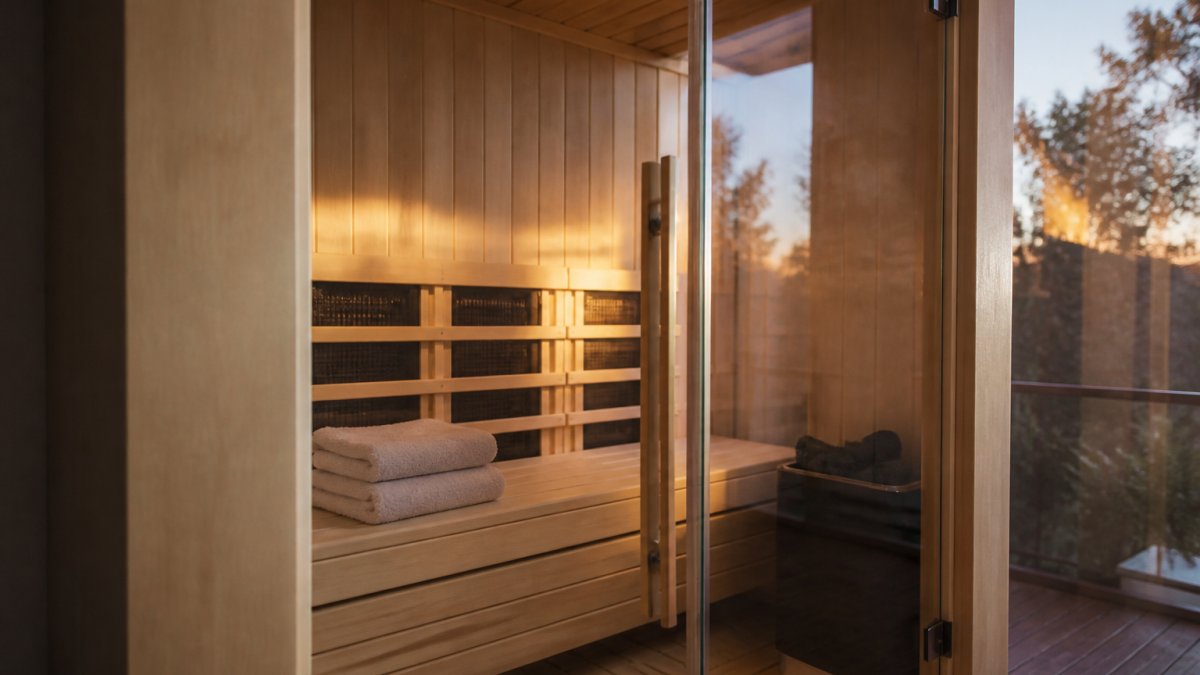
Start with the specification. Ask for EMF readings at the seating position, not at the heater. Ask what the interior timber is and whether the panels are carbon or ceramic. Ask how the cabin is ventilated, because a sealed box gets oppressive fast.
Then check the footprint. Our 1 Person Home Infrared Sauna (£1,799.99) suits a compact spare room or a corner of a larger bathroom, with a Canadian hemlock interior and far-infrared carbon panels. The 2 Person Home Infrared Sauna (£2,299.99) gives two people room to sit without negotiating elbow space. The 3 Person Home Infrared Sauna (£2,799.99) is the one to choose if you want the sauna to double as a shared evening ritual.
Materials matter for the long term as well as the look. Natural hemlock and red cedar age well, handle humidity without warping and keep the cabin feeling warm rather than clinical.
For buyers weighing up whether the investment is justified, the honest answer is that a sauna earns its keep through frequency of use. If you can commit to three or four sessions a week, the low emf infrared sauna benefits compound. If it will sit unused, no specification will rescue it.
Frequently Asked Questions
What does low EMF mean in an infrared sauna?
Low EMF means the sauna's heaters and wiring emit a smaller electromagnetic field than standard models. Manufacturers measure this in milligauss (mG) at set distances from the heater panels. There is no single legal limit for sauna EMF in the UK, so a 'low EMF' claim is only meaningful when a seller publishes actual readings. Ask for the measurement distance and the meter used, then compare like for like. A low EMF sauna reduces your exposure, but it does not eliminate it entirely.
How long should you use an infrared sauna for?
Most people start with 15 to 20 minutes per session and build towards 30 to 40 minutes once they know how their body responds. Infrared sauna session duration depends on the cabin's heat output, your tolerance and your hydration levels. Shorter, regular sessions tend to suit beginners better than one long weekly session. Stop immediately if you feel dizzy, nauseous or lightheaded, and drink water before and after. Build a routine you can keep rather than pushing for maximum time.
Are low EMF infrared saunas safer than standard infrared saunas?
They reduce one variable, not every risk. A low EMF sauna lowers your electromagnetic field exposure compared with a poorly shielded cabin, which matters if you are sensitive to it or simply prefer to minimise it. The other infrared sauna risks and precautions stay the same: dehydration, overheating, low blood pressure and fainting are all possible in any sauna. Anyone pregnant, taking medication that affects sweating or blood pressure, or managing a heart condition should speak to their GP first.
Do infrared saunas have proven health benefits?
The strongest evidence covers relaxation, muscle recovery and short-term cardiovascular response, not long-term disease prevention. Many infrared sauna benefits reported by users, such as better sleep and less stiffness after exercise, are plausible and widely described, but research is still limited and often small-scale. Treat marketing claims about detoxification or weight loss with caution. A sauna is a wellbeing habit, not a treatment, and it works best alongside sleep, movement and a sensible diet.
The hardest part of buying a home sauna is not the specification, it is trusting that the cabin in your spare room will actually get used. NORDEN SAUNAS builds around that reality: contemporary Scandinavian design that sits comfortably in a home rather than shouting about itself, far-infrared carbon heating for consistent warmth, and natural hemlock interiors that feel calm the moment you close the door. Explore the collection and find the cabin that fits your space and your routine.


Leave a comment
This site is protected by hCaptcha and the hCaptcha Privacy Policy and Terms of Service apply.