
Last Updated: November 2, 2026
Quick Summary
The best infrared sauna for muscle recovery depends on cabin size rather than heat output: the 1 Person Home Infrared Sauna at £1,799.99 suits solo daily recovery, the 2 Person at £2,299.99 suits couples, and the 3 Person at £2,799.99 suits families. An infrared sauna is a comfort practice, not a medical treatment.
- Start with 20-minute sessions and build up as your heat tolerance improves.
- Cool down, rehydrate with water and change out of damp kit before sitting down.
- Single-person far-infrared cabins usually draw 1.5 kW to 2 kW from a standard 13-amp socket.
- Far-infrared cabins typically run at 45-60°C, against 70-90°C for traditional Finnish saunas.
- Check doorway and stairwell dimensions before ordering, as many UK suppliers offer kerbside delivery only.
Table of Contents
- Quick Comparison: Three Home Infrared Saunas for Recovery
- How Infrared Heat Supports Muscle Recovery
- 1 Person Home Infrared Sauna: Best for Solo Recovery
- 2 Person Home Infrared Sauna: Best for Shared Recovery
- 3 Person Home Infrared Sauna: Best for Spacious Cabins
- Using an Infrared Sauna After a Workout: Timing and Protocol
- How Long to Use an Infrared Sauna for Recovery
- Infrared Sauna vs Traditional Sauna for Recovery
- Frequently Asked Questions
Quick Comparison: Three Home Infrared Saunas for Recovery
If you are weighing up the best infrared sauna for muscle recovery, the short answer is that cabin size, not heat output, decides which model suits you. At NORDEN SAUNAS we build three far-infrared cabins, and each one solves a different recovery problem: solo sessions, shared sessions, or a roomy cabin you can stretch out in.
Here is the comparison at a glance.
| Sauna | Price | Best For | Interior | Heating |
|---|---|---|---|---|
| 1 Person Home Infrared Sauna | £1,799.99 | Solo recovery, compact rooms | Canadian hemlock | Far-infrared carbon panels |
| 2 Person Home Infrared Sauna | £2,299.99 | Shared recovery, couples | Natural hemlock | Far-infrared warmth |
| 3 Person Home Infrared Sauna | £2,799.99 | Spacious cabins, families | Wide Canadian hemlock | Far-infrared carbon panels |
Infrared sauna use after exercise is a comfort practice, not a medical treatment. Below, we explain what the heat does, how long to stay in, and which cabin fits your routine.
How Infrared Heat Supports Muscle Recovery
Infrared heat warms the body directly rather than heating the air around it. Far-infrared panels emit radiant warmth that reaches muscle tissue at lower cabin temperatures than a traditional sauna, which many people find easier to sit in for longer. That gentler heat is why an infrared sauna after a workout feels less punishing than a steam room.
The warmth is consistent and surrounds you on all sides.
Circulation, Soreness and Tissue Repair
Many people find heat soothing after training, and relaxation is a comfortable part of a recovery routine.
Heat is a comfort measure that sits alongside sleep, hydration and protein intake rather than replacing them. Anyone with a health condition should speak to a GP before regular use.
1 Person Home Infrared Sauna: Best for Solo Recovery
The 1 Person Home Infrared Sauna is the pick for anyone whose recovery routine is a private, daily ritual. At £1,799.99 it is the most compact and least expensive cabin we make.
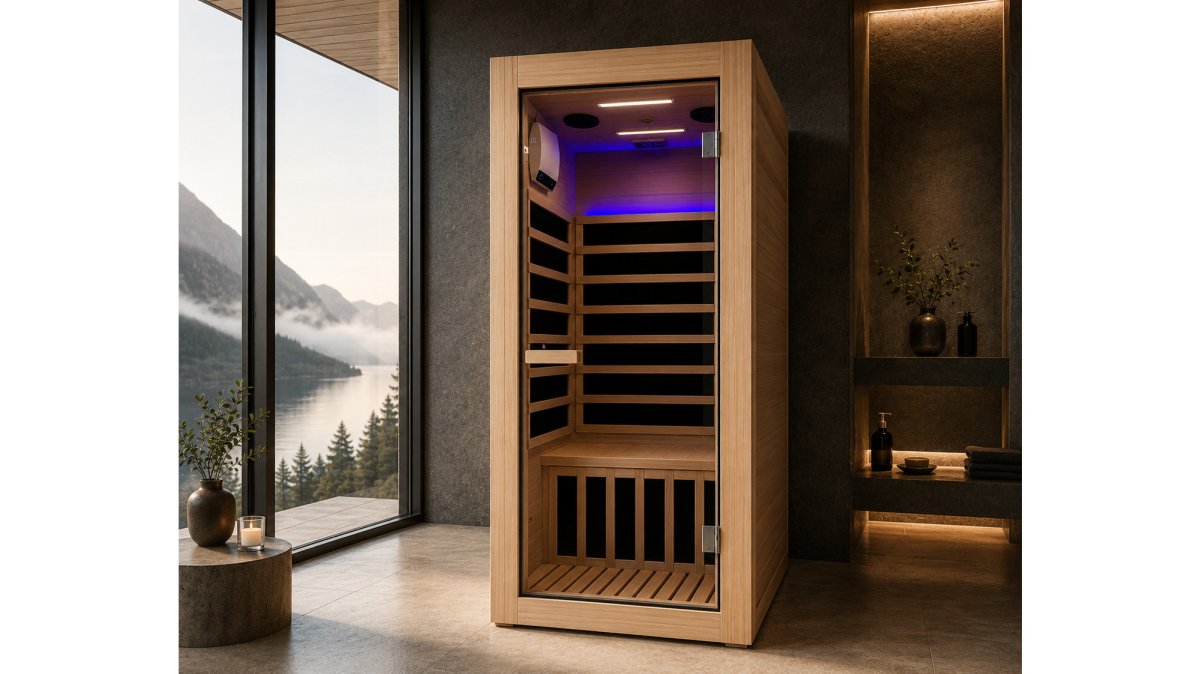
The Canadian hemlock interior creates a naturally warm setting, while far-infrared carbon panels surround the body with consistent heat. Clear tempered glass keeps the cabin feeling light rather than enclosed, and intelligent controls, integrated audio and soft internal lighting create a calm setting.

Best for: solo users who want a daily post-training habit. Skip if: you regularly want to share sessions with a partner.
You can view the one-person infrared sauna to check the dimensions against your space.
2 Person Home Infrared Sauna: Best for Shared Recovery
Shared recovery is where the 2 Person Home Infrared Sauna earns its £2,299.99 price.
Far-infrared warmth surrounds the body as the natural hemlock interior, soft lighting and enclosed cabin create a calm atmosphere away from the noise of everyday life.
Best for: couples and training partners. Skip if: you only ever train alone and space is tight.
See the two-person infrared sauna for the full specification.

3 Person Home Infrared Sauna: Best for Spacious Cabins
The 3 Person Home Infrared Sauna at £2,799.99 is a more spacious cabin.
The wide Canadian hemlock interior brings the natural character of timber into the home, paired with far-infrared carbon panels for consistent warmth throughout the cabin. For families, or for anyone who wants recovery to feel like a proper retreat rather than a squeeze, this is the one.
Best for: families and roomier installations. Skip if: your space is genuinely limited.
Explore the three-person infrared sauna to see the cabin layout.

Using an Infrared Sauna After a Workout: Timing and Protocol
Many people prefer to use a sauna once their body temperature and heart rate have settled after training.
1 Person Home Infrared Sauna →
A general approach many people follow:
- Cool down and rehydrate first, with water rather than alcohol or caffeine
- Change out of damp training kit before you sit down
- Start with 20 minutes and build up as your heat tolerance improves
- Keep a water bottle inside the cabin and sip through the session
- Shower and rest afterwards rather than rushing straight into the next task
Watch out: avoid alcohol before a session and leave if you feel dizzy.
Recovery protocols by workout type
A common pattern among people using home infrared cabins is to adjust session length and timing to the training they have just done, rather than treating every workout the same.
Evidence quality: what heat can and cannot do
Infrared sauna use after exercise is a comfort practice, not a medical treatment. The research base is mixed: some studies suggest heat exposure may support circulation and perceived soreness, while others show no measurable effect on markers of muscle damage or performance. Most of the positive findings come from small trials, often in laboratory settings, and should be read as preliminary rather than definitive.
Heat is a relaxing habit that does not replace rest, nutrition or clinical care. If you are managing an injury, speak to a physiotherapist or GP.
UK electrical and installation considerations
Before you buy any home infrared cabin, check the power supply. Most single-person far-infrared cabins draw between 1.5 kW and 2 kW and can run from a standard 13-amp ring-main socket, but larger two- and three-person cabins often need a dedicated circuit. A qualified electrician should confirm the load and install a suitable supply; do not assume a spare socket will cope.
Delivery and installation also vary. Many UK suppliers offer kerbside delivery only, with a two-person installation service as a paid extra. Check doorway and stairwell dimensions before ordering, a cabin that will not fit through the door is an expensive mistake. Warranty terms are worth reading closely too: typical UK cover runs from one to three years on components, with the heater panels sometimes covered separately.
How Long to Use an Infrared Sauna for Recovery
Stop earlier if you feel lightheaded. Consistency matters more than duration.
Frequency should follow how your body responds rather than a fixed target. For deeper guidance on how often to use an infrared sauna, see our dedicated article.
Infrared Sauna vs Traditional Sauna for Recovery
Infrared warmth is gentler than the high air temperatures of a traditional sauna, which some people find more comfortable. If you are still deciding, read why choose infrared before committing.
A like-for-like comparison for recovery use
| Factor | Far-infrared cabin | Traditional Finnish sauna |
|---|---|---|
| Typical air temperature | 45-60°C | 70-90°C |
| Warm-up time | 10-15 minutes | 30-45 minutes |
| Typical power draw (home unit) | 1.5-2 kW | 3-6 kW |
| Electrical requirement | Often a standard 13-amp socket for single-person cabins; dedicated circuit for larger units | Usually a dedicated circuit and often three-phase supply for larger heaters |
| Session length | 30-50 minutes | 10-20 minutes, often split into rounds |
| Running cost per session (approx.) | £0.30-£0.60 at a typical UK electricity rate | £0.60-£1.20 at a typical UK electricity rate |
| Installation | Freestanding cabin, plug-in or spur | Often built-in, with ventilation and drainage |
| Recovery suitability | Longer, gentler sessions; easier to use daily | Shorter, more intense; some find it draining post-training |
Figures are indicative and depend on your tariff, cabin size and how long the unit runs. Use them as a starting point for your own running-cost calculation rather than a quotation.
Total cost of ownership
Purchase price is only part of the picture. A single-person far-infrared cabin at £1,799.99 might cost roughly £0.40 per session in electricity if run for 40 minutes at 1.8 kW on a tariff of around 24p per kWh. Four sessions a week works out to about £6.40 a month in running costs. A traditional sauna of comparable capacity, drawing 4 kW for a 45-minute warm-up plus a 20-minute session, would use roughly 4.3 kWh per use, closer to £1.03 per session, or £16.50 a month at the same frequency.
Add installation: a dedicated circuit for a larger cabin might cost £200-£500 depending on your consumer unit and cable run, while a plug-in single-person cabin may need nothing beyond a suitable socket. Maintenance is modest for both, wipe down surfaces, check heater panels annually, but traditional saunas with exposed stones and timber benches need more frequent attention.
Warranty cover is worth comparing directly. UK suppliers typically offer one to three years on components, with heater panels sometimes covered for longer. Check whether the warranty covers home installation or only the cabin as delivered.
Which suits your recovery routine?
If your priority is a daily, low-friction habit that fits a spare room and a standard socket, a far-infrared cabin is the more practical choice. If you prefer short, intense heat and have the space and electrical supply for a traditional sauna, that route remains viable, but budget for installation and higher running costs.
Frequently Asked Questions
How can an infrared sauna help with muscle recovery?
Infrared saunas use far-infrared panels to warm the body directly rather than heating the air. Many people use a session as part of a wind-down routine after training. Treat it as one comfortable habit alongside sleep, hydration and protein intake, not a replacement for them.
How long should you use an infrared sauna after exercise?
Listen to your body and come out immediately if you feel dizzy or lightheaded. Drink water before and after. Consistency matters more than duration.
Is an infrared sauna or a traditional sauna better for recovery?
Traditional saunas heat the air to 70 to 90 degrees Celsius, which many people find intense and hard to tolerate daily. Infrared cabins run cooler, typically 45 to 60 degrees Celsius, and warm the body directly, so sessions feel gentler and are easier to fit into a busy evening.
What should you look for in an infrared sauna for muscle recovery?
Check four things: cabin size against your room, heater type and coverage, build materials, and running costs. Far-infrared carbon panels give consistent, even warmth across the body. Check the warranty length and whether installation is included. Finally, work out the running cost from the heater wattage and your electricity tariff.
Can an infrared sauna help with muscle soreness?
Heat therapy is widely used to ease muscle discomfort and tension, and infrared saunas apply that heat across the whole body at once. Many people find a session relaxing. It will not replace rest. If soreness is sharp, one-sided or lasts beyond a few days, speak to a GP or physiotherapist rather than relying on heat.
Recovery is a habit, and the cabin you will actually use every week beats the one with the longest feature list. NORDEN SAUNAS builds far-infrared cabins in Canadian hemlock with carbon panel heating, intelligent controls and integrated audio, sized for one, two or three people. Get started with NORDEN SAUNAS and turn a corner of your home into a place where training and recovery meet.



Leave a comment
This site is protected by hCaptcha and the hCaptcha Privacy Policy and Terms of Service apply.