
Last Updated: 4 November 2026
Quick Summary
Luxury home sauna installation cost covers far more than the cabin itself: delivery, electrical work, site preparation and finishing typically make up a substantial share of the final figure. Budget in four parts, the cabin or kit, electrical supply and hardwired connection, site preparation and foundation work, and delivery, assembly and bespoke joinery.
- Our one-person home infrared sauna is £1,799.99 and the three-person model is £2,799.99, covering the cabin only.
- A qualified electrician should survey your consumer unit before you order anything.
- The heater's rating, not the cabin's footprint, sets the circuit size.
- Hidden costs include consumer unit upgrades, ventilation work, moisture-proofing and delivery surcharges.
- Confirm building regulations requirements with your local authority before work begins.
Table of Contents
- What Luxury Home Sauna Installation Cost Really Includes
- Infrared Sauna Installation Cost: What to Expect
- Traditional Sauna Installation Cost and Build Considerations
- Sauna Electrical Requirements and Site Preparation
- Home Sauna Running Costs and Total Cost of Ownership
- Planning Permission, Building Regulations and Resale Value
- Choosing Your Sauna: Matching the Investment to Your Space
- Frequently Asked Questions
What Luxury Home Sauna Installation Cost Really Includes
Understanding luxury home sauna installation cost starts with separating the cabin from everything around it. The unit itself is only part of the outlay; delivery, electrical work, site preparation and finishing typically account for a substantial share of the final figure. Buyers often focus on the headline price and overlook the surrounding costs, which is where budgets quietly stretch.
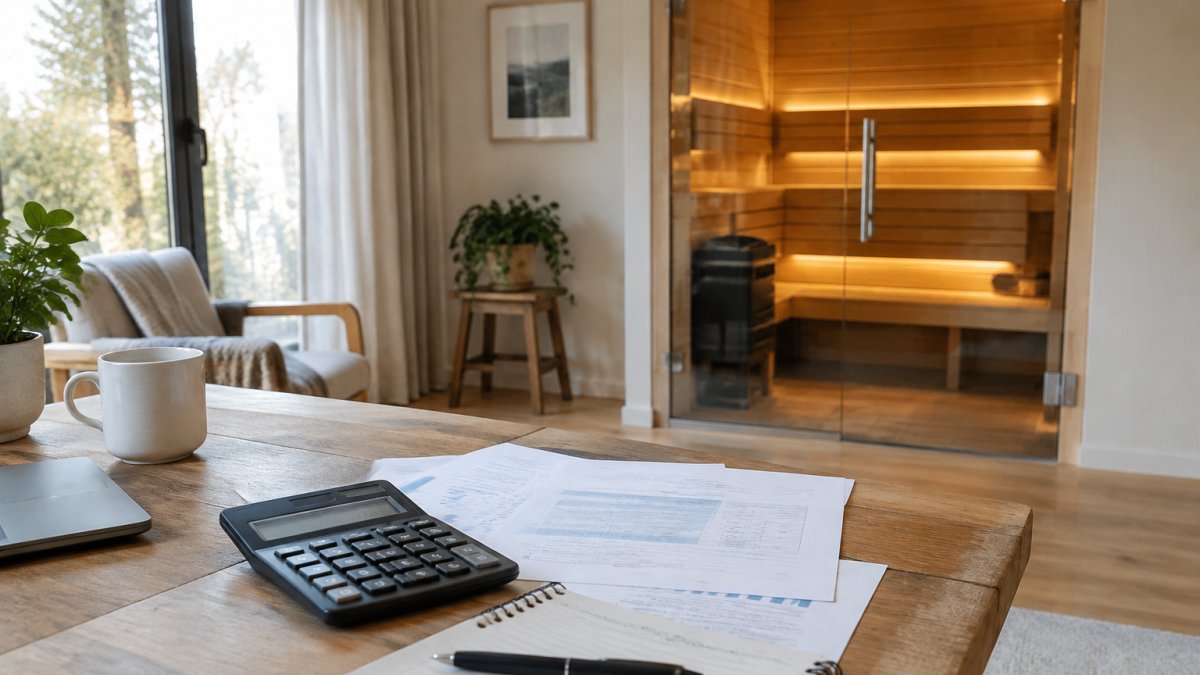
A realistic budget has four parts:
- The sauna cabin or pre-fabricated kit
- Electrical supply and hardwired connection
- Site preparation and foundation work
- Delivery, assembly and any bespoke joinery
Entry-Level Kits vs Bespoke Wellness Suites
Pre-fabricated kits and bespoke wellness suites sit at opposite ends of the market. A kit arrives as a modular infrared cabin, often in kiln-dried timber, and slots into an existing room with modest electrical work. A bespoke suite involves custom joinery, cedar cladding, thermal insulation and a professional fit-out, so the budget climbs accordingly.
If you are planning a bespoke build, it helps to look at modern home sauna design ideas before you commit to a layout and a higher spend. The design stage is where bespoke projects either stay controlled or run away.
Infrared Sauna Installation Cost: What to Expect
An infrared cabin does not need a chimney or flue, which keeps the build simpler than a traditional sauna. The main variables are cabin size, electrical load and whether the room needs structural work. A compact one-person unit can sit in a spare room; a larger cabin may need a dedicated circuit and a reinforced floor.
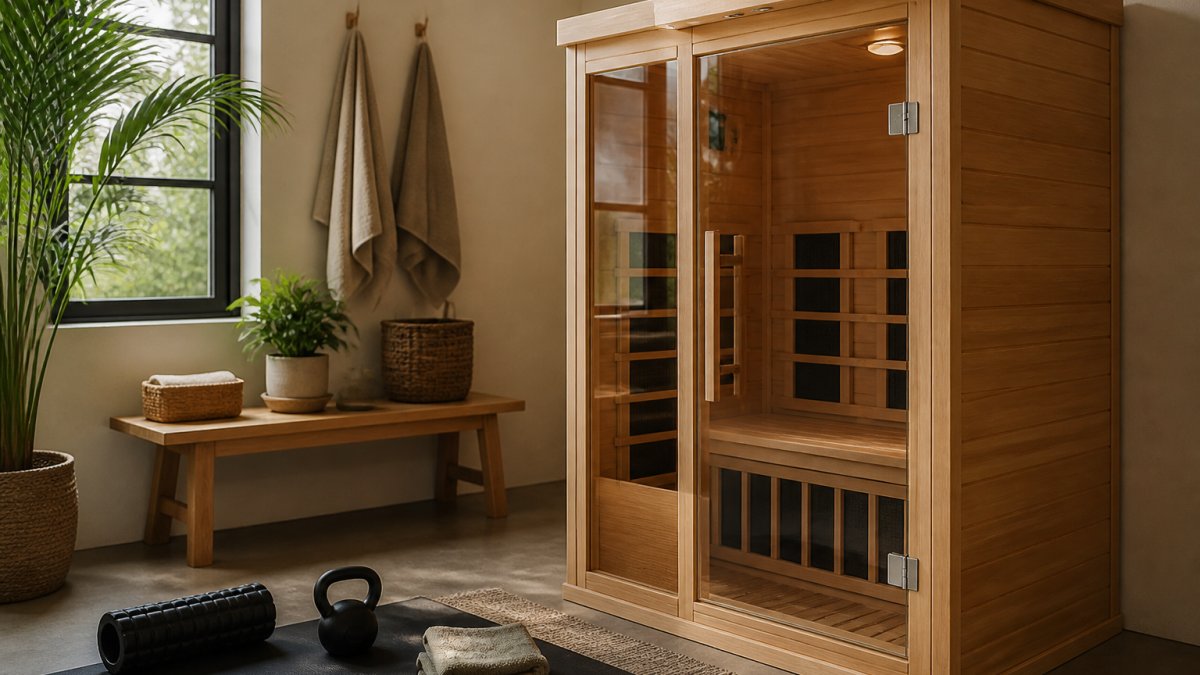
For a concrete reference point, our one-person home infrared sauna is £1,799.99, while the three-person model is £2,799.99. Those figures cover the cabin, not the electrical work or site preparation, which is where the rest of your budget goes.


Traditional Sauna Installation Cost and Build Considerations
A traditional wood-fired or electric heater sauna needs ventilation requirements met properly, a moisture barrier, fire-safe clearances and often a flue. Timber choice matters too: cedar cladding and kiln-dried timber resist heat and moisture far better than softwoods.
The build itself is closer to a small construction project than a furniture install. Foundation preparation, bench ergonomics and heat retention all need planning before a single panel goes up.
Sauna Electrical Requirements and Site Preparation
Sauna electrical requirements are often underestimated in a budget, and they can force a change of plan after the cabin has been ordered. Infrared cabins draw a steady load, and a dedicated circuit with RCD protection is normally needed, installed by a qualified electrician. A qualified electrician should assess your consumer unit before you order anything, because the answer determines whether the project is a straightforward fit-out or a small electrical upgrade.
The sequence that keeps budgets controlled is always the same: survey first, cabin second, installation third.
- Consumer unit survey. The electrician confirms spare ways, the rating of the existing supply and whether RCD protection can be extended to the new circuit. Older units with limited spare capacity are the most common cause of unplanned spend.
- Cable route and isolation. A hardwired cabin needs a safe route from the consumer unit, an isolator within reach of the door and protection appropriate to a damp, hot environment. Chasing cables through finished walls is where making-good costs appear.
- Load calculation. The heater's rating, not the cabin's footprint, sets the circuit size. A larger traditional heater can push a supply closer to its limit than buyers expect, particularly in a property that already runs an electric shower or heat pump.
- Testing and certification. The work should be tested and a certificate issued on completion. Ask for this before work starts, not after, and keep it with the property documents.
Site preparation matters just as much, and it is where the luxury end of the market diverges from kit installations. Check that the floor can take the cabin's weight plus the occupants and the heater. Confirm ventilation requirements for the room, because a sealed modern interior will need a route for moisture-laden air to leave. Allow clearance for the door swing and for bench access. A common mistake is ordering a cabin before measuring the delivery route; narrow stairwells, tight corners and listed-building doorways catch people out.
For an outdoor or garden build, add groundworks to the list: a level, free-draining base, a duct for the supply cable and a plan for how the structure will be maintained. Moisture-proofing belongs here too. A luxury cabin is only as good as the vapour barrier and drainage detail behind it, and retrofitting either after the cladding is on is expensive.
1 Person Home Infrared Sauna →
Watch out: skipping the electrician's survey and assuming a plug socket will do is the fastest way to add an unplanned bill once the cabin arrives, and on a bespoke suite it can delay the entire fit-out.
Hidden Installation Costs to Budget For
Hidden costs tend to cluster around access, electrical capacity and finishing rather than the sauna itself. Budget for:
- Upgrading the consumer unit or adding a circuit, including testing and certification
- Floor reinforcement, levelling or a new base for an outdoor cabin
- Extractor or ventilation work, including ducting through a wall or roof
- Moisture-proofing and drainage detail behind cladding or panelling
- Delivery surcharges for upper floors, restricted access or long carries
- Making good after installation, including plastering, tiling and decoration
- Temporary protection of floors and finishes during the fit-out
None of these is unusual. All of them are routinely left out of quotes, and together they can represent a meaningful share of a luxury budget. The practical defence is to ask every supplier for a written scope that states what is and is not included, then price the exclusions separately before committing.
Home Sauna Running Costs and Total Cost of Ownership
Home sauna running costs depend on how often you use it, the heater type, the insulation of the cabin and your electricity tariff. Most guides stop there. The more useful approach for a luxury purchase is total cost of ownership: purchase price, installation, energy consumption over several years, maintenance and the occasional replacement part, added together and compared honestly.
The mechanism is straightforward. Energy use per session is the heater's rating multiplied by the time it runs, and the time it runs is dominated by heat-up rather than by the session itself. Energy use per session depends largely on heat-up time, and a well-insulated cabin with a tight door seal and a properly sized heater can help keep running costs down.
A five-year view changes the ranking of options. A cheaper cabin is not always the cheapest to own, because poor thermal efficiency and earlier replacement of components can add up over time. The variables worth putting into your own calculation are:
- Purchase and installation. Fixed and known upfront, including the electrical and site-preparation lines above.
- Energy per session. Estimate from the heater rating, the heat-up time and your tariff, then multiply by realistic weekly use rather than optimistic use.
- Maintenance reserve. Timber care, door seals, heater elements and, for traditional saunas, flue and chimney checks. A small annual reserve is more accurate than assuming zero.
- Replacement parts. Heaters, controllers and seals have finite lives. Spreading their replacement cost across the years they serve gives a truer annual figure.
- Insurance and warranty. Confirm the installation is covered by your home insurance and that the warranty terms survive a professional fit-out.
| Cost Category | What It Covers | Budget Approach |
|---|---|---|
| Cabin or kit | The sauna unit itself | Fixed, known upfront |
| Electrical | Circuit, hardwiring, RCD protection, certification | Get a survey first |
| Site preparation | Floor, ventilation, access, moisture-proofing | Allow a contingency |
| Running costs | Energy per session, based on heater rating and tariff | Estimate from realistic use |
| Maintenance | Timber care, seals, heater checks | Small annual reserve |
| Replacement parts | Heaters, controllers, seals over their service life | Spread across service years |
Run the numbers for your own usage pattern before you choose between infrared and traditional, and before you choose between a kit and a bespoke suite. The answer is often that the higher upfront option wins on five-year cost, which is exactly the trade-off a luxury buyer should be making deliberately rather than by default.
Planning Permission, Building Regulations and Resale Value
Building regulations can apply to electrical work and structural changes, so confirm requirements with your local authority before work begins. An outdoor cabin may need permission depending on size and position. Always confirm with your local authority before work begins, and check the official guidance on building regulations approval so you know which parts of the project need sign-off.
Choosing Your Sauna: Matching the Investment to Your Space
Matching the cabin to the room is the decision that protects your budget. Measure the space, the door width and the delivery route before anything else. If space is tight, our guide to small footprint infrared sauna models covers the options that fit without dominating a room.
For a mid-range option, the two-person home infrared sauna at £2,299.99 sits between the compact and family sizes. Whichever you choose, plan the electrical survey and site preparation first, then buy the cabin to fit what your space can actually take.

Frequently Asked Questions
How much does it cost to install a luxury home sauna?
A luxury home sauna installation cost depends on the type and size you choose. At NORDEN SAUNAS, a 1 Person Home Infrared Sauna is £1,799.99, the 2 Person is £2,299.99 and the 3 Person is £2,799.99. These prices cover the cabin itself; you should also budget for electrical connection by a qualified electrician, any site preparation and delivery, which vary by property.
What affects the sauna installation cost the most?
The biggest factors are the type of sauna (infrared or traditional), the size of the cabin, and the electrical work required. Electrical connection work, where needed, adds to the total. Site preparation, such as levelling a floor or reinforcing a structure, and whether you choose an indoor or outdoor position also affect the total. Ventilation requirements and proximity to your consumer unit matter too.
Does a home sauna need special electrical work or ventilation?
Electrical connection should be installed by a qualified electrician. Check the product specification and follow the manufacturer's guidance on ventilation and installation. If you are unsure, have an electrician assess your consumer unit before you buy.
How much does it cost to run a home sauna?
Home sauna running costs depend on the heater's power rating, how long each session lasts and your electricity tariff. Running costs depend on how often and how long you use the sauna. Running several sessions a week adds up over a year, so factor energy consumption into your total cost of ownership alongside maintenance and any replacement parts.
The real challenge is not picking a sauna; it is budgeting for everything around it without losing sight of the calm you set out to create. NORDEN SAUNAS designs contemporary Scandinavian infrared saunas with natural hemlock interiors, far-infrared carbon panels and intelligent controls, so the cabin itself is one less variable to worry about. Get started with NORDEN SAUNAS and build a private sanctuary that fits your space and your budget.


Leave a comment
This site is protected by hCaptcha and the hCaptcha Privacy Policy and Terms of Service apply.