
Last Updated: 26 October 2026
Quick Summary
An infrared sauna stress relief routine works best as a short daily session: start at 45°C to 50°C for 15 minutes in week one, build to 20 to 30 minutes, and finish 60 to 90 minutes before bed. Drink a glass of water before and after, and keep the cabin screen-free so the session stays a pause rather than a task.
- Start at 45°C to 50°C for your first few sessions and move up slowly.
- Week one is 15 minutes, week two 20 minutes, then 25 to 30 minutes.
- Drink one glass of water 30 minutes before and one to two glasses after.
- Finish your session 60 to 90 minutes before getting into bed.
- Pick one fixed anchor, such as after your evening shower, to build the habit.
Table of Contents
- Why an Infrared Sauna Works as a Daily Stress Relief Routine
- What You'll Need Before Your First Session
- Step 1: Choose Your Infrared Sauna Temperature for Beginners
- Step 2: Decide How Long to Stay in an Infrared Sauna
- Step 3: Plan Infrared Sauna Hydration Before and After
- Step 4: Use Your Infrared Sauna Before Bed for Better Wind-Down
- Common Mistakes That Undo the Calm
- Choosing the Right Sauna for Your Routine
- Frequently Asked Questions
Why an Infrared Sauna Works as a Daily Stress Relief Routine
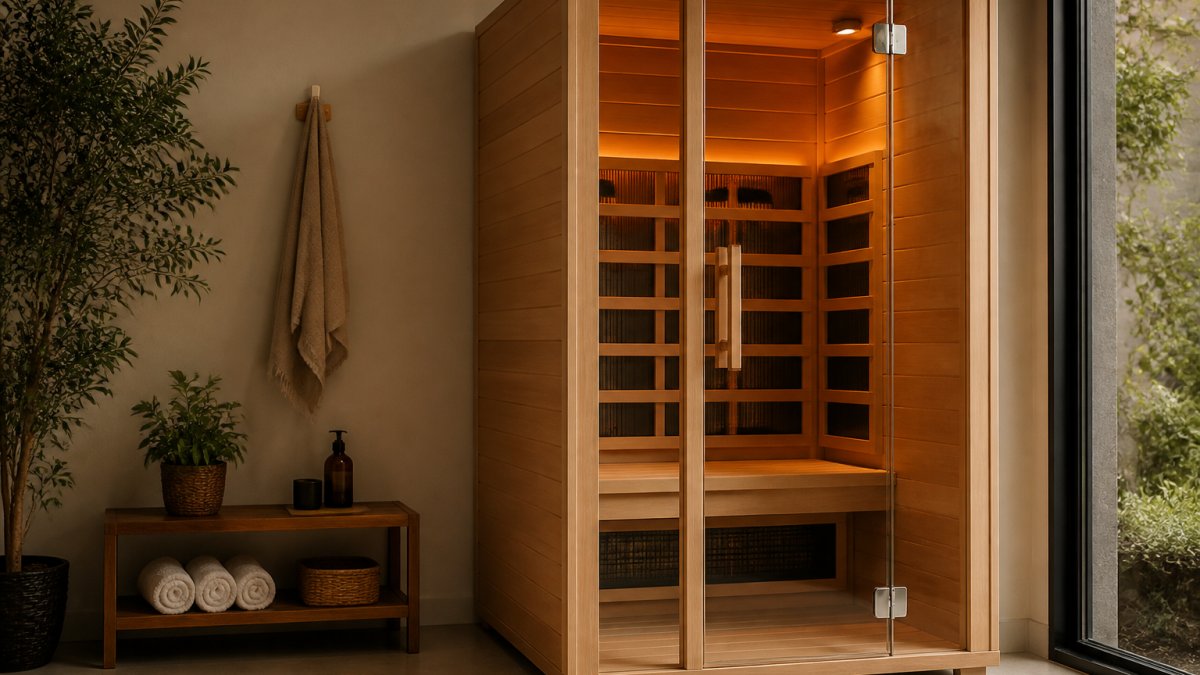
An infrared sauna for stress relief routine works because it gives your nervous system a fixed point of calm in the day. Far-infrared panels warm the body directly rather than the air around it, so the cabin stays comfortable while your muscles loosen and your breathing slows. At NORDEN SAUNAS, we designed our cabins around exactly this idea: a quiet, private space you return to daily, not a weekend treat.
The difference matters. A routine is repeatable. A treat is occasional. And the health benefits people actually notice tend to come from the repeatable version.
What makes it work:
- Warmth relaxes tense muscles in the back, neck and shoulders
- A closed cabin removes you from screens and noise
- The session has a clear start and end, which help you switch off
- Sitting still for a set time gives your breathing a chance to slow
You do not need a long session to get this. Consistency beats duration every time. Below, we show you exactly how to build the habit, from temperature to timing to what to drink afterwards. If you want to know how often to use it before you commit, our guide on how often to use an infrared sauna sets out a realistic schedule. And if low EMF output is on your mind, our piece on low EMF infrared sauna benefits covers what to expect.
What You'll Need Before Your First Session
Preparation is short, but skipping it is the fastest way to an uncomfortable first session. Get these in place before you step in.
- Two towels: one to sit on, one to dry off with
- A water bottle: filled before you start, not after
- A timer: your phone works, but a simple clock keeps you off screens
- Loose clothing or a towel wrap: anything that lets heat reach your skin
- An ergonomic pillow: supports the head and neck so you can recline properly
That last item is worth a moment. A flat bench forces your neck into an awkward angle for twenty minutes. Our ergonomic sauna pillow is built from smooth natural cedar with an angled slatted design, so it supports the head and neck while the open slats keep air moving. Small thing. Big difference to how relaxed you feel at the end.

Watch out: drinking alcohol before a session raises your risk of feeling faint. Save the glass of wine for afterwards.
Step 1: Choose Your Infrared Sauna Temperature for Beginners
Start at 45°C to 50°C for your first few sessions. That range is warm enough to relax muscles without overwhelming a body that is not used to infrared heat. The right infrared sauna temperature for beginners is lower than most people expect, and that is deliberate.
Move up slowly. After a week at 50°C, try 55°C. Most people settle somewhere between 50°C and 60°C for daily stress relief, and stay there.
Three signals tell you to turn it down:
- You feel lightheaded rather than relaxed
- Your skin stings instead of glowing
- You are watching the clock rather than forgetting it
Heat tolerance varies widely between people. Treat the dial as a starting suggestion, not a target to beat. The goal is calm, not endurance.
Step 2: Decide How Long to Stay in an Infrared Sauna
Aim for 20 to 30 minutes per session. That is the sweet spot for most people building a daily habit. How long to stay in an infrared sauna depends on your experience and the temperature, but 20 minutes at a moderate setting does more for stress than 45 minutes at a punishing one.
A simple progression:
- Week one: 15 minutes per session
- Week two: 20 minutes
- Week three onwards: 25 to 30 minutes
Come out earlier if you feel dizzy, nauseated or overly hot. There is no prize for finishing the timer.
Watch out: falling asleep in the cabin is common and not dangerous in a home sauna, but it wrecks your session length. Set an alarm.
Here is the simple progression the article sets out for building up your session length.
1 Person Home Infrared Sauna →
| Stage | Session length |
|---|---|
| Week one | 15 minutes per session |
| Week two | 20 minutes |
| Week three onwards | 25 to 30 minutes |
| Target range | 20 to 30 minutes per session |
Step 3: Plan Infrared Sauna Hydration Before and After
Drink a glass of water before you step in and another afterwards. Infrared sauna hydration before and after a session is the single most overlooked part of the routine, and it is the one that decides whether you feel refreshed or drained.
A workable pattern:
- One glass of water 30 minutes before
- One glass during, if your cabin allows a bottle inside
- One to two glasses in the hour after
Add a pinch of salt or an electrolyte tablet to your post-session glass if you sweat heavily. Plain water replaces volume; electrolytes replace what you lost. Skip caffeine and alcohol right before a session, since both work against the calming effect you are trying to create.
Step 4: Use Your Infrared Sauna Before Bed for Better Wind-Down
An infrared sauna before bed works best when it finishes 60 to 90 minutes before you get into bed. That gap lets your core temperature come back down, which is part of what makes you feel sleepy.
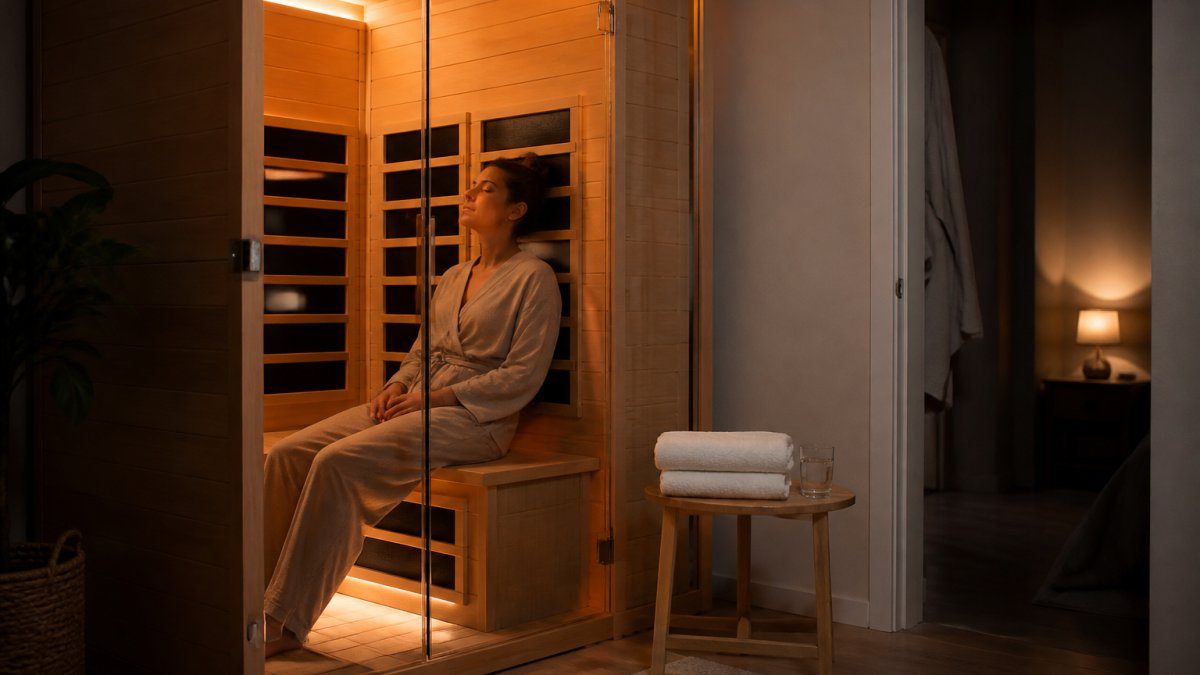
The routine looks like this:
- Session ends
- Cool shower or a few minutes in a cooler room
- Herbal tea, low light, no screens
- Bed
Done this way, the sauna becomes the start of your wind-down rather than the whole of it. The warmth does the physical work; the quiet hour afterwards does the mental work.
Common Mistakes That Undo the Calm
The biggest mistake is treating the sauna as a task to complete rather than a pause to sink into. People rush in, scroll on their phone, watch the timer and rush out. That is heat, not rest.
Other mistakes worth avoiding:
- Going too hot too soon: discomfort cancels relaxation
- Skipping hydration: leaves you flat for the rest of the evening
- Sessions that are too long: fatigue replaces calm
- No fixed time of day: an irregular routine rarely sticks
- Bringing your phone in: the screen undoes what the cabin does
What most guides miss is that the habit forms around a trigger, not willpower. Pick one anchor, such as after your evening shower or straight after work, and repeat it until it stops being a decision.
Choosing the Right Sauna for Your Routine
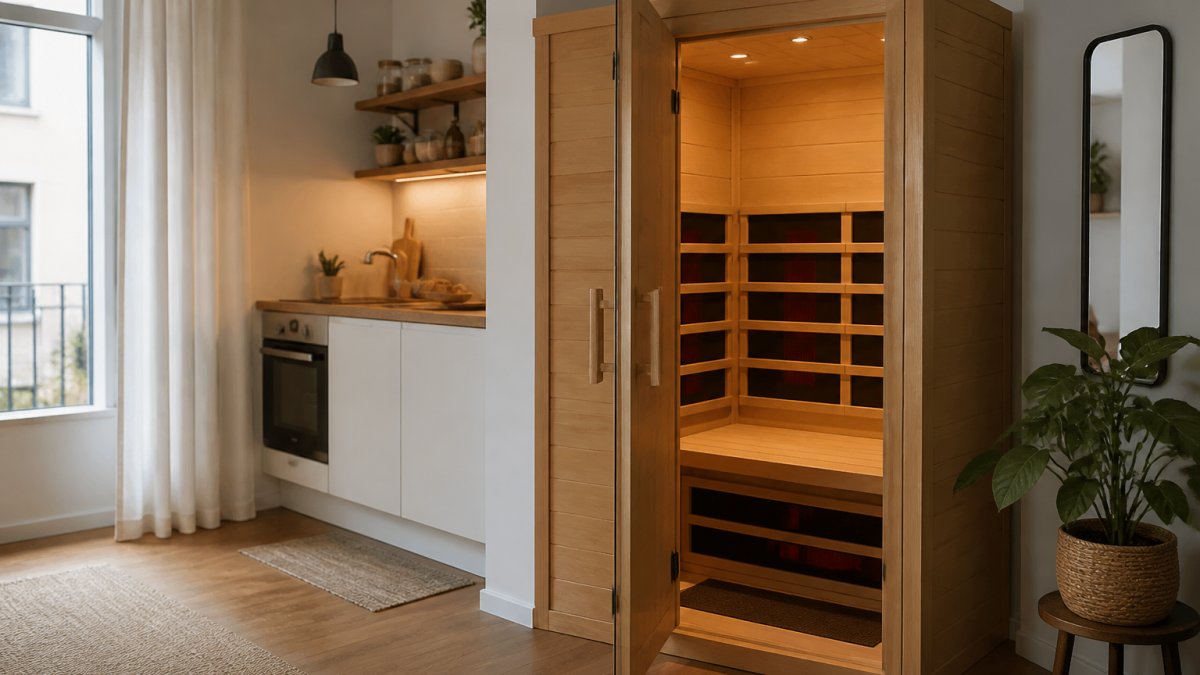
A daily routine needs a cabin that fits your space and your life, not the other way around. If you are setting up a solo wind-down habit, our one person home infrared sauna is designed for exactly that: Canadian hemlock interior, far-infrared carbon panels, tempered glass, integrated audio and soft internal lighting, at £1,799.99.

For couples who want to share the routine, the two-person cabin at £2,299.99 gives you room to unwind together. Households with a busier wellness schedule may prefer the three-person model at £2,799.99, which brings the same hemlock interior and carbon panel heating into a wider space.
A few things to weigh:
- Footprint: measure the room, not just the wall
- Who uses it: solo routine or shared
- Placement: near a bedroom makes evening sessions easy
- Design: natural timber tones settle into most interiors
For a wider look at indoor options, our guide to the best indoor infrared sauna for home compares the range side by side.
Frequently Asked Questions
How often should you use an infrared sauna to help manage stress?
Most people settle into a rhythm of three to four sessions a week, each lasting 20 to 30 minutes at a comfortable temperature. Consistency matters more than duration: a short session you actually keep up with will do more for your stress levels than an occasional long one. Start with two sessions a week and add more as your body adjusts. If you have a heart condition, are pregnant or take medication, speak to your GP before starting.
What temperature is best for a relaxing infrared sauna session?
Beginners should start at 40°C to 50°C and stay there for the first few sessions. Once that feels comfortable, you can work up to 55°C to 65°C, which is where most people find the deepest relaxation. Infrared saunas feel cooler than traditional saunas at the same setting because the heat reaches your body directly rather than heating the air. If you feel lightheaded, step out and cool down rather than pushing through.
Can you use an infrared sauna before bed?
Yes, and it suits many people well. Finish your session 60 to 90 minutes before you intend to sleep so your core temperature has time to drop, which is part of what makes you feel sleepy. Keep the session short, around 20 minutes at a moderate temperature, and follow it with a lukewarm shower rather than a hot one. A glass of water and a quiet room afterwards help the wind-down stick.
What should you do before and after an infrared sauna session?
Drink a glass of water beforehand and keep another within reach during the session. Remove jewellery and wear light cotton clothing or a towel. Afterwards, drink again to replace what you lost through sweat, rinse off if you like, and give yourself 15 to 20 minutes of quiet before returning to screens or chores. Skipping the hydration step is the most common reason people feel drained rather than restored.
Building a daily stress relief habit is harder than it sounds. The intention is there; the routine slips. NORDEN SAUNAS exists to make that habit easy to keep, with Scandinavian-designed cabins in natural hemlock and cedar, far-infrared carbon heating, and a footprint that fits a real home. Start with the one-person cabin, add an ergonomic pillow, and give yourself twenty quiet minutes a day. Get started with NORDEN SAUNAS and turn a spare corner into the calmest part of your evening.



Leave a comment
This site is protected by hCaptcha and the hCaptcha Privacy Policy and Terms of Service apply.